How to Store a Torque Wrench Properly and Avoid Losing Accuracy
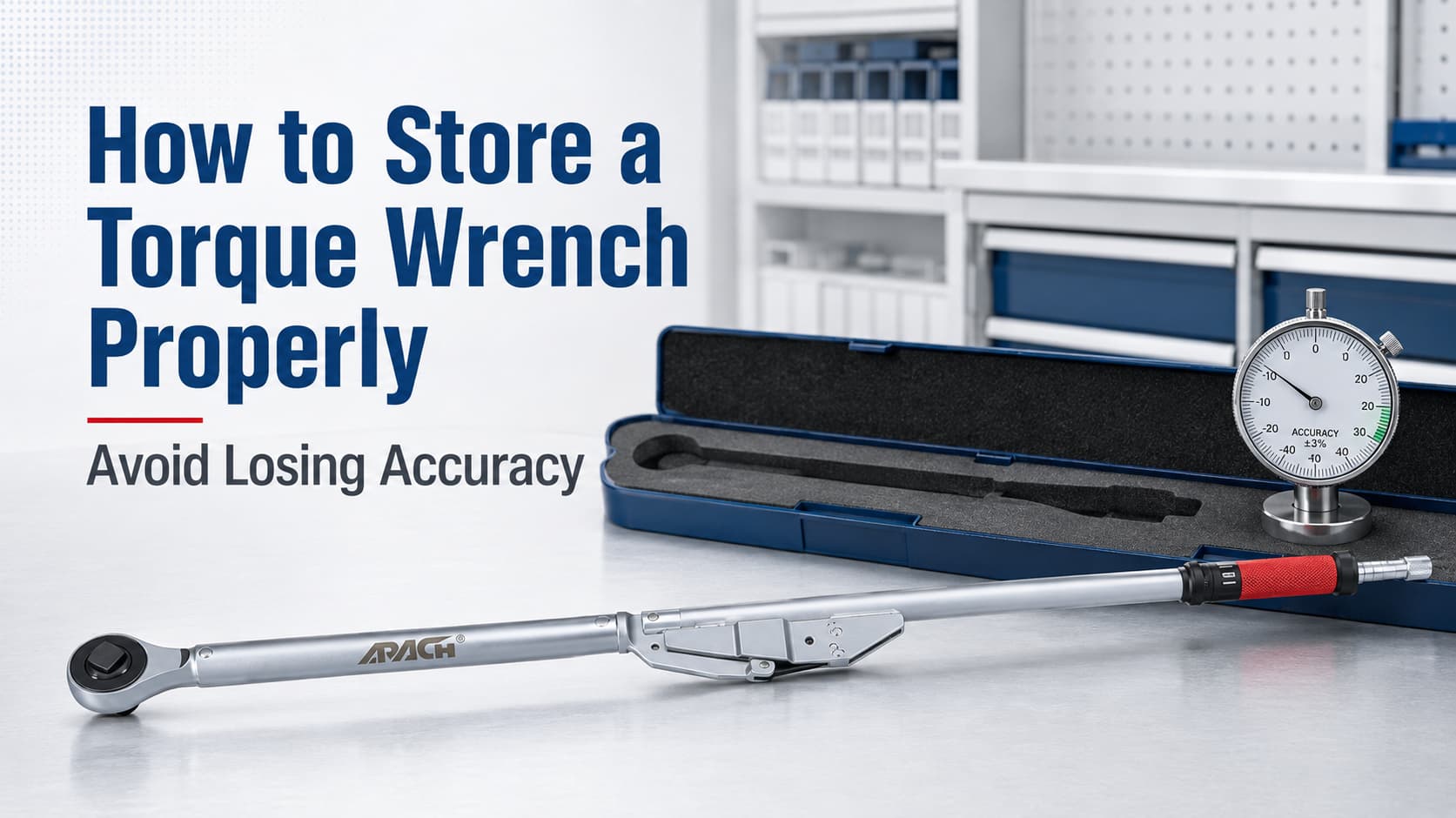
A torque wrench should not be left on a workbench, stored at a high torque setting, or placed loose inside a crowded toolbox.
For workshops, vehicle service centers, assembly lines, and industrial maintenance teams, proper torque wrench storage helps protect calibration, prevents physical damage, and keeps the tool ready for controlled fastening work.
After each use:
- Clean the wrench with a dry cloth.
- Return an adjustable click-type wrench to its lowest marked setting.
- Do not turn it below the minimum scale or force it to zero unless the manual specifically says to do so.
- Place it in its original case.
- Store it in a clean, dry area away from heat, moisture, chemicals, and vibration.
The correct method may vary by torque wrench design. Click-type, split-beam, breakback, slipping, and digital tools do not always have the same storage requirements.
Quick Torque Wrench Storage Guide
| Torque Tool Type | Setting Before Storage | Main Storage Concern |
|---|---|---|
| Adjustable click-type torque wrench | Return to the lowest marked setting | Do not leave the internal spring under high load |
| Split-beam torque wrench | Follow the manufacturer’s instructions; some designs do not need to be reset | Protect the head, scale, and adjustment lock |
| Breakback torque wrench | Follow the model instructions and release any applied load | Protect the break mechanism from impact |
| Slipping torque wrench | Keep unloaded and follow the presetting instructions | Prevent unauthorized adjustment or impact damage |
| Digital torque wrench or adaptor | Turn it off and remove batteries for long-term storage when recommended | Protect the electronics from moisture and battery leakage |
| Torque screwdriver | Release adjustable load when required and store it in its case | Protect the drive and adjustment mechanism |
Why Does Storage Affect Torque Wrench Accuracy?
A torque wrench is a measuring tool, not just a standard ratchet. Its internal mechanism is designed to indicate or control a specific torque value.
Poor storage may expose the tool to:
- Long-term spring tension
- Moisture and corrosion
- Dust and metal particles
- Impact or bending
- Extreme temperature changes
- Chemical contamination
- Battery leakage in digital models
These conditions may not cause an obvious failure. Instead, the wrench may gradually become less reliable and apply more or less torque than expected.
This is especially important in automotive repair, heavy truck maintenance, machinery assembly, and other work where inaccurate torque can damage threads, loosen joints, or reduce assembly quality.
1. Return Click-Type Torque Wrenches to the Lowest Setting
After using an adjustable click-type torque wrench, return it to the lowest value marked on its scale before storage.
Leaving the wrench at a high torque setting keeps the internal spring compressed. Long-term compression may affect the spring and change how the mechanism responds.
However, do not turn the handle below the lowest marked value. Forcing the setting below its designed range may also affect the mechanism.
The correct practice is:
- Unlock the adjustment mechanism.
- Turn the handle back to the lowest marked torque value.
- Do not force it past the minimum.
- Lock the handle if the tool’s instructions require it for storage.
APACH’s Industry Torque Wrench uses a click-type notification and an adjustable locking system. APACH recommends resetting this type of torque wrench to its lowest setting and keeping it in a dry environment after use.
2. Do Not Apply the Same Rule to Every Torque Wrench
Not every torque wrench uses a coil-spring mechanism.
For example, APACH’s Flexible Split-Beam Torque Wrench uses a non-coil-spring mechanism and does not need to be returned to zero after use.
This is why maintenance teams should not apply one storage rule to every tool in the cabinet.
Before setting a storage procedure, identify whether the tool is:
- Click-type
- Split-beam
- Breakback
- Slipping
- Digital
- Preset
- Adjustable
If the tool manual gives specific instructions, those instructions should take priority over a general torque wrench maintenance checklist.
3. Clean the Wrench Before Putting It Away
Wipe the wrench after each job, especially when it has been used around oil, grease, dust, coolant, or metal particles.
Use a clean, dry cloth to remove surface dirt. Pay attention to:
- The square drive
- Ratchet head
- Adjustment scale
- Locking mechanism
- Handle and grip
- Flexible or interchangeable joints
Do not immerse the wrench in cleaning liquid. Avoid spraying solvent directly into the ratchet head or adjustment mechanism unless the manufacturer specifically allows it.
Strong chemicals may damage seals, lubrication, plastic parts, scale markings, or electronic components.
4. Store the Wrench in Its Case
The original storage case protects the torque wrench from impact, dirt, and contact with other tools.
A torque wrench should not be stored loose in a toolbox where sockets, hammers, or other metal tools can strike it. A strong impact may damage the ratchet, bend the body, or change calibration even when no external damage is visible.
For production areas with several torque tools, use:
- Individual protective cases
- Labeled drawers
- Foam tool organizers
- Dedicated torque tool cabinets
- Separate locations for tools awaiting calibration
Do not use the torque wrench case to store heavy sockets or unrelated tools that could press against the wrench.
5. Keep the Storage Area Dry and Stable
The ideal storage area should be clean, dry, and protected from major temperature changes.
Avoid storing torque wrenches:
- Near wash areas
- On damp floors
- Inside vehicles for long periods
- Next to welding or heating equipment
- In direct sunlight
- Near corrosive chemicals
- In areas with constant machine vibration
Moisture can cause corrosion on the ratchet, drive, spring, or other internal parts. Large temperature changes may also affect lubricant condition and measurement consistency.
If a wrench is moved from a cold storage area into a warm and humid workshop, allow it to reach the working temperature before use. This helps reduce condensation and supports more stable operation.
6. Protect Digital Torque Tools and Batteries
Digital torque wrenches and adaptors need additional care because they contain electronic parts, displays, sensors, and batteries.
Before storage:
- Turn the tool off.
- Clean the display with a soft, dry cloth.
- Keep the battery compartment dry.
- Remove batteries before long-term storage if recommended by the manual.
- Do not store the tool with leaking, damaged, or fully depleted batteries.
- Protect the display and control buttons from impact.
APACH’s Digital Torque Adaptor is designed for precision measurement in workshops, assembly lines, and field maintenance. Protecting its display, electronic components, and drive adaptors is an important part of long-term storage.
7. Never Use a Torque Wrench as a General-Purpose Tool
Good torque wrench maintenance also depends on how the tool is used before storage.
Do not use a torque wrench as:
- A breaker bar
- A hammer
- A pry bar
- A tool for loosening seized fasteners
- A handle extension point
Using excessive force or adding an unapproved extension may overload the wrench and affect calibration.
Use a standard ratchet or breaker bar to loosen tight fasteners. Use the torque wrench only for the final controlled tightening step unless the product instructions state otherwise.
When Should a Stored Torque Wrench Be Recalibrated?
Proper storage helps protect accuracy, but it does not replace regular inspection and calibration.
APACH recommends professional recalibration once a year or after approximately 5,000 cycles for its Industry Torque Wrench, depending on usage and internal quality requirements.
Calibration should also be checked when:
- The wrench has been dropped.
- It has been overloaded.
- The wrench has been used to loosen a seized fastener.
- The adjustment or ratchet feels different.
- It has been stored unused for a long period.
- The tool shows rust, bending, or physical damage.
- Torque results become inconsistent.
- The application requires traceable quality control.
High-use assembly lines may need shorter inspection intervals than occasional maintenance work. Each company should set its calibration schedule according to usage frequency, fastening risk, customer requirements, and quality procedures.
Torque Wrench Maintenance Checklist
- Is the wrench clean and dry?
- Has the adjustable click-type wrench been returned to its lowest marked setting?
- Is the adjustment mechanism locked or released as required?
- Are the ratchet and square drive free from visible damage?
- Has the wrench been dropped or overloaded?
- Is the calibration label still valid?
- Is the wrench inside its protective case?
- Is the storage area dry and stable?
- Have batteries been checked or removed for long-term digital tool storage?
- Is the tool separated from items awaiting repair or calibration?
A simple inspection after each use can prevent an inaccurate or damaged tool from returning to production.
Protect Accuracy with the Right Storage Routine
The answer to how to store a torque wrench depends partly on the tool design, but the basic rules remain simple: remove the load when required, keep the tool clean and dry, protect it from impact, and follow a regular calibration schedule.
For adjustable click-type models, return the setting to the lowest marked value—not below the scale. For split-beam, breakback, slipping, or digital models, follow the storage instructions for that specific mechanism.
APACH INDUSTRIAL CO., LTD. provides a range of professional torque wrenches, including adjustable click-type, breakback, split-beam, slipping, industrial, interchangeable, and digital torque tools.
When selecting a torque wrench for a workshop or production line, provide the required torque range, drive size, accuracy, fastening direction, daily usage, and quality control needs. Choosing the right design—and storing it correctly—helps support reliable fastening performance over the tool’s working life.