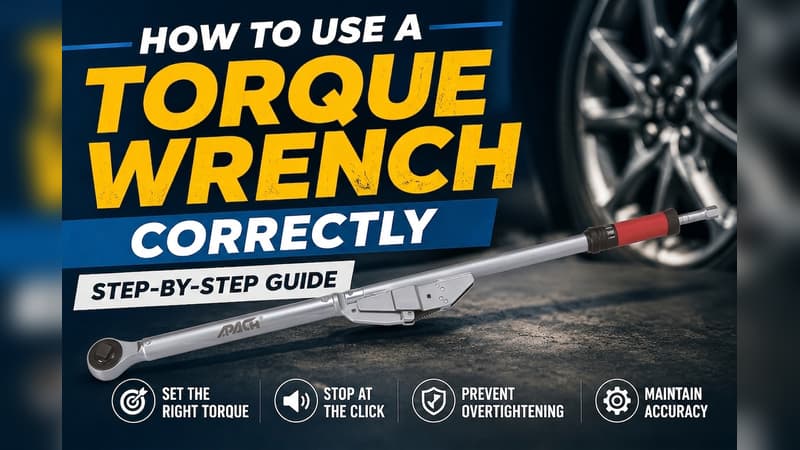
How to Use a Torque Wrench Correctly (Step-by-Step Guide)
A torque wrench is one of the most important tools for achieving accurate and repeatable fastening. Whether you're working on automotive wheels, engine components, bicycles, or industrial machinery, following the correct torque specifications ensures safety, reliability, and long-term equipment performance.
Many users know how to use a torque wrench, but fewer understand the importance of tightening bolts correctly and using a calibrated tool. Incorrect technique can lead to inaccurate torque readings, damaged threads, or the need for costly repairs.
In this guide, you'll learn correct torque wrench usage, proper torque wrench instructions, and practical methods to prevent overtightening while maintaining fastening accuracy.
Quick Answer: How Do You Use a Torque Wrench?
If you're looking for a quick overview, follow these basic steps:
- Set the desired torque value.
- Install the correct socket securely.
- Tighten the fastener smoothly.
- Stop immediately when the wrench clicks or reaches the target indication.
- Reset the torque setting before storage if using a click-type wrench.
Following these steps helps ensure correct torque wrench usage while extending the life of your tool.
Step 1. Choose the Correct Torque Wrench
Before starting, make sure your torque wrench matches the required torque range.
Different applications require different torque capacities:
Step 2. Find the Required Torque Specification
Always use the manufacturer's recommended torque specifications. These values are carefully engineered to ensure proper clamping force and reliable fastening performance.
You can usually find torque specifications in:
- Vehicle service manuals
- Equipment manuals
- Engineering drawings
- OEM repair databases
Using the correct torque specification is essential for tightening bolts correctly and avoiding both under-tightening and overtightening.
Step 3. Set the Torque Correctly
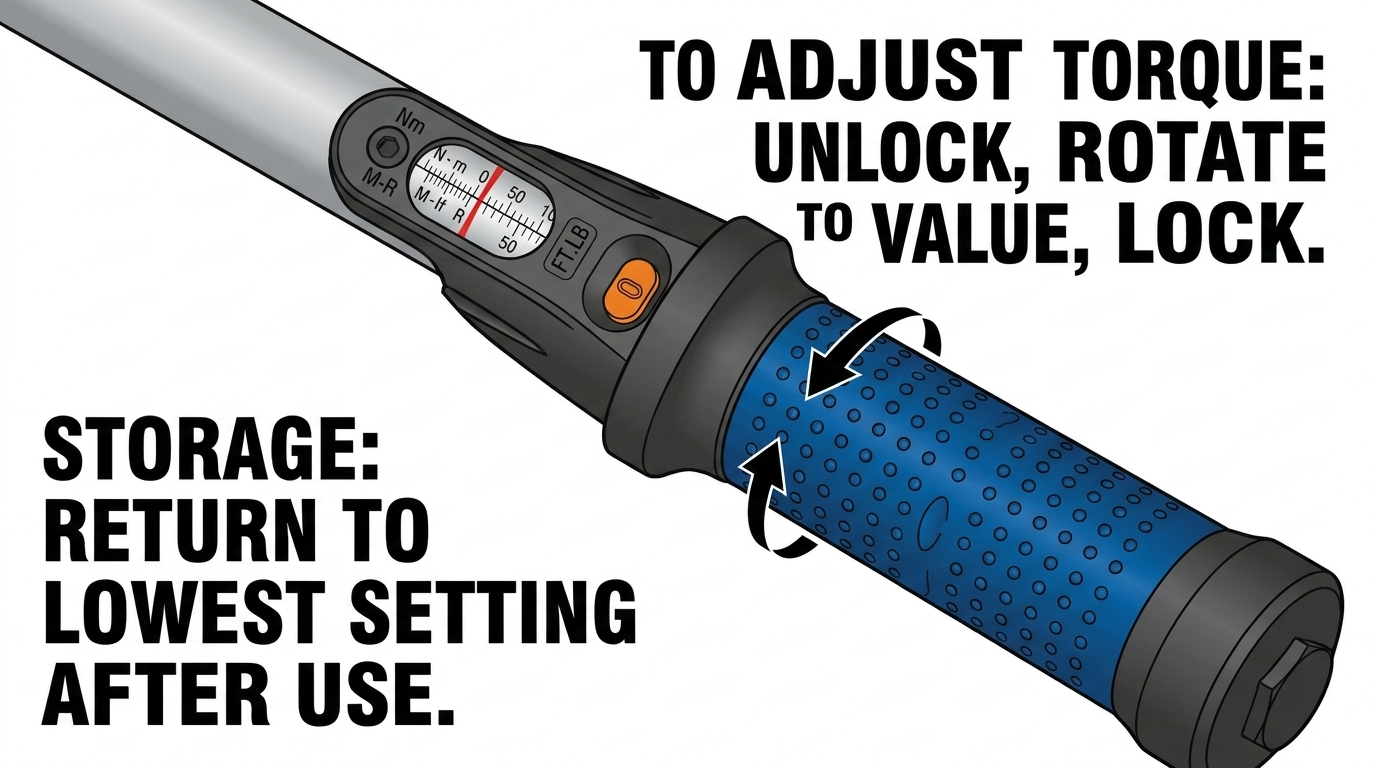
Most click torque wrenches use a micrometer-style adjustment.
The process typically involves:
- Unlocking the handle
- Rotating to the desired torque value
- Locking the handle again
Double-check that the main scale and fine adjustment scale align properly.
Step 4. Attach the Correct Socket
Use:
- Correct socket size
- High-quality impact or hand socket, depending on application
Avoid worn or oversized sockets, as they can affect accuracy and damage fasteners.
Step 5. Tighten Slowly and Smoothly
This is where many users make mistakes.
Apply force:
- Slowly
- Smoothly
- Using the center of the handle
- Without jerking
Maintain a steady pulling motion until the wrench indicates the preset torque.
Step 6. Stop Immediately at the Click
For click torque wrenches, the click signals that the preset torque has been reached.
Do not continue pulling after the click.
Stopping immediately helps prevent overtightening and protects threads, bolts, and mating surfaces from unnecessary stress.
Click vs. Feel: What Should You Trust?
Many beginners ask:
"Should I rely on the click or how tight it feels?"
The answer is simple:
Always trust the wrench—not your hand.
Human perception of torque is surprisingly inconsistent and varies depending on:
- Grip strength
- Fastener size
- Lubrication
- Body position
- Fatigue
A calibrated torque wrench removes this uncertainty by providing a measurable and repeatable tightening force.
Think of the click as the tool's way of saying:
"Stop now—the correct torque has been reached."
Common Torque Wrench Mistakes
Avoid these common errors to maintain accuracy and prevent damage.
1. Using the Wrong Torque Range
A wrench is most accurate in the middle portion of its operating range.
Avoid using a large wrench for very small torque values.
2. Pulling Too Fast
Quick jerking motions can overshoot the target torque before the mechanism activates.
3. Continuing After the Click
One click means stop.
Repeated clicking adds unnecessary torque.
4. Using the Torque Wrench to Loosen Bolts
Unless the manufacturer specifically allows it, torque wrenches should not be used as breaker bars.
Doing so can damage the internal calibration mechanism.
5. Forgetting to Reset the Torque
After use, return click-type torque wrenches to their lowest recommended setting before storage.
This helps reduce long-term spring fatigue.
Why Torque Wrench Calibration Matters
Even the best technique cannot compensate for an inaccurate tool. Regular torque wrench calibration ensures that the wrench continues to deliver the correct torque value over time.
Professional technicians often calibrate their torque wrenches:
- Every 5,000–10,000 cycles
- After a significant impact or drop
- When accuracy is critical for engine or industrial assemblies
- According to manufacturer recommendations
If you're unsure when your wrench should be calibrated, read our detailed guide: How Often Should You Calibrate a Torque Wrench? Expert Guide.
Pro Tips for Correct Torque Wrench Usage
Professionals often follow these best practices:
- Keep the wrench perpendicular to the fastener.
- Tighten in stages for critical assemblies.
- Follow the specified tightening sequence.
- Use calibrated tools.
- Store the wrench properly after every use.
These habits improve consistency and extend tool life.
Frequently Asked Questions
1. Can you use a torque wrench to loosen bolts?
Generally, no.
Most click torque wrenches are designed for tightening only. Using them to loosen stubborn fasteners may damage the internal mechanism unless the manufacturer specifically approves reverse operation.
2. What happens if you keep tightening after the click?
Continuing after the click increases the applied torque beyond the preset value, potentially causing stripped threads, broken bolts, or warped components.
3. How fast should you pull a torque wrench?
Use slow, steady pressure.
Avoid sudden movements or jerking, as they can reduce accuracy.
4. Should I hear one click or multiple clicks?
One clear click is enough.
Repeated clicking simply adds unnecessary torque.
5. Do I need to calibrate my torque wrench?
Yes.
Regular calibration helps maintain measurement accuracy, especially if the wrench is used frequently or has been dropped.
Final Thoughts
Mastering how to use a torque wrench correctly means more than simply waiting for a click. It involves following the correct torque specifications, tightening bolts correctly, maintaining proper torque wrench calibration, and knowing when to stop to prevent overtightening.
Whether you're working on vehicles, industrial equipment, or precision assemblies, proper torque wrench usage is an essential skill that every technician should master.
Looking for a Reliable Torque Wrench Supplier?
Whether you need OEM solutions or bulk orders, Apach Tools has the expertise and capacity to meet your requirements.
→ Contact Us for a Custom Quote
Recommended Reading
Continue learning with these related guides: