Do Air Impact Wrenches Need Oil? Maintenance Guide for Longer Lifespan
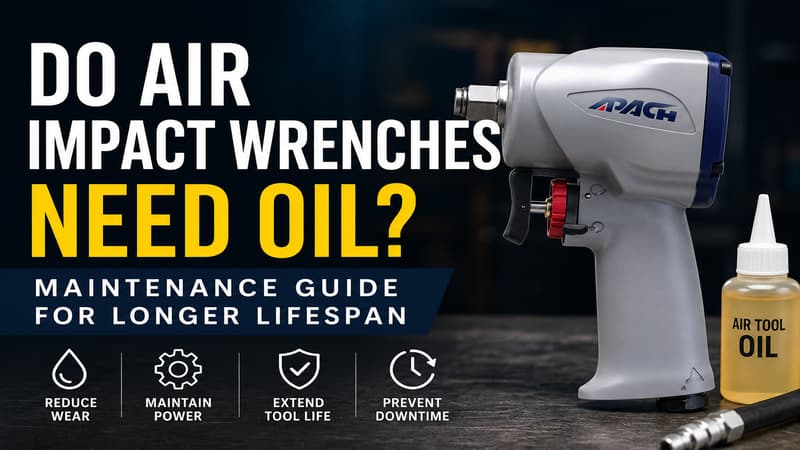
Yes, air impact wrenches require regular lubrication to maintain optimal performance and maximize tool lifespan. Without proper oiling, internal components can wear prematurely, torque output may decrease, and costly repairs may become necessary.
In most cases, applying a few drops of air tool oil before or after use is one of the simplest and most effective ways to keep an air impact wrench running smoothly.
Why Do Air Impact Wrenches Need Oil?
Air impact wrenches rely on high-speed internal moving parts, including the hammer mechanism, rotor, bearings, and seals. These components generate friction during operation and require lubrication to reduce wear and maintain efficiency.
Proper lubrication helps:
- Reduce friction between moving components
- Prevent corrosion caused by moisture in compressed air
- Maintain consistent torque output
- Extend tool lifespan
- Minimize downtime and repair costs
Even the most durable pneumatic tools can suffer performance issues if lubrication is neglected.
What Happens If You Don't Oil an Air Impact Wrench?
Insufficient lubrication can cause a variety of problems over time.
Reduced Power Output
One of the first signs of poor lubrication is decreased performance. The tool may feel weaker than usual or struggle to loosen stubborn fasteners.
If you've noticed a drop in performance, you may also want to read our guide on Why Is My Air Impact Wrench Losing Power? (Complete Fix Guide).
Increased Internal Wear
Without a protective oil film, metal components experience greater friction and wear. Over time, this can damage critical parts such as:
- Hammer mechanisms
- Bearings
- Rotor blades
- O-rings and seals
These failures often lead to expensive repairs or premature replacement.
Corrosion and Moisture Damage
Compressed air systems naturally introduce moisture into pneumatic tools. Lubrication helps protect internal surfaces from rust and corrosion.
This is particularly important for operators working in challenging environments. For example, tools used in cold or humid regions face greater exposure to moisture-related issues. Learn more in 3/4" & 1" Air Impact Wrenches in Cold and Humid Climates.
How Often Should You Oil an Air Impact Wrench?
The ideal lubrication frequency depends on usage intensity.
| Usage Frequency | Recommended Lubrication |
|---|---|
| Daily Industrial Use | Before each shift |
| Professional Automotive Use | Daily |
| Occasional DIY Use | Before and after use |
| Long-Term Storage | Before storage |
For high-production environments, inline lubricators may provide a more consistent solution.
How to Properly Oil an Air Impact Wrench
Proper lubrication only takes a few minutes.
Step 1: Disconnect the Air Supply
Always disconnect the tool from the compressed air source before maintenance.
Step 2: Add Air Tool Oil
Place 2–5 drops of pneumatic tool oil directly into the air inlet.
Avoid using:
- Motor oil
- Engine oil
- WD-40
- Grease
These products are not designed for lubricating the internal air motor of pneumatic impact tools. Grease should not be added through the air inlet. Instead, use the manufacturer-recommended grease only on designated areas, such as the impacting mechanism, during periodic maintenance as specified in the tool's service manual.
Step 3: Reconnect and Run Briefly
Reconnect the air supply and operate the tool for a few seconds to distribute the oil throughout the internal mechanism.
Step 4: Wipe Excess Oil
Remove any excess oil around the inlet or exhaust area.
Why Air Supply Quality Matters as Much as Lubrication
Many users focus solely on oiling but overlook another critical factor: airflow.
Even a well-lubricated impact wrench may underperform if the air delivery system restricts airflow.
Common causes include:
- Undersized air hoses
- Worn fittings
- Air leaks
- Incorrect compressor setup
To understand how airflow affects performance, see Why Hoses and Fittings Are the Key to Power.
Common Maintenance Mistakes to Avoid
Proper maintenance involves more than simply adding oil.
Mistake #1: Never Oiling the Tool
Many users assume modern impact wrenches are maintenance-free. This misconception often leads to premature wear.
Mistake #2: Using the Wrong Lubricant
Always use air tool oil specifically formulated for pneumatic equipment.
Mistake #3: Ignoring Routine Inspections
Regularly inspect:
- Air inlet connections
- Hoses
- Fittings
- Retaining rings
- Socket condition
Additional maintenance errors are covered in 3 Common Mistakes to Avoid When Using an Air Impact Wrench.
Does Tool Size Affect Maintenance Requirements?
Whether you're using a compact assembly-line tool or a heavy-duty industrial impact wrench, lubrication remains essential.
Large pneumatic tools such as 3/4" and 1" impact wrenches often operate under higher loads and require consistent maintenance to maintain peak performance.
Learn how these tools are commonly used in 1" and 3/4" Air Impact Wrenches in Truck & Heavy-Duty Vehicle Maintenance.
Choosing an Air Impact Wrench That Is Easy to Maintain
Not all impact wrenches are designed equally. Features such as sealed mechanisms, durable hammer systems, and accessible maintenance points can significantly improve service life.
Helpful resources include:
- What Is an Air Impact Wrench?
- A Guide to the Different Types of Impact Wrenches
- How to Choose the Right Air Impact Wrench for Your Needs
- 5 Key Factors to Consider When Choosing an Air Impact Wrench
- Choosing the Right Air Impact Wrench for Heavy-Duty Vehicles: 3/4" & 1"
- Why Manufacturers Choose Stubby Air Impact Wrenches for Tight-Space Assembly Lines
Impact Wrench vs Torque Wrench: Why Maintenance Matters
Many professionals use impact wrenches for rapid fastening and torque wrenches for final tightening.
Understanding the differences between these tools helps improve both efficiency and fastening accuracy. For a complete comparison, read Impact Wrench vs Torque Wrench: Differences, Use Cases & Best Practices.
Final Thoughts
So, do air impact wrenches need oil?
Absolutely. Regular lubrication is one of the simplest and most effective ways to extend tool life, maintain torque output, and prevent costly repairs.
Combined with proper airflow, routine inspections, and correct operating practices, a few drops of air tool oil can significantly improve the reliability and longevity of your pneumatic tools.
For professionals who rely on impact wrenches every day, lubrication should be considered a standard part of preventive maintenance—not an optional step.
FAQ
How many drops of oil should I put in an air impact wrench?
Most manufacturers recommend 2–5 drops of air tool oil into the air inlet before use.
What oil should I use for an air impact wrench? Can I use WD-40 instead?
For regular maintenance, use air tool oil specifically formulated for pneumatic tools. Do not use WD-40 as a substitute for air tool oil. While WD-40 may help displace moisture temporarily, it is not designed to provide long-term lubrication for the internal air motor, rotor, seals, and moving components of an air impact wrench.
What happens if I never oil my air impact wrench?
The tool may lose power, experience accelerated wear, develop internal corrosion, and ultimately fail prematurely.
Does every air impact wrench require lubrication?
Most pneumatic impact wrenches require lubrication unless specifically designed with a maintenance-free lubrication system.
Is lubrication more important for heavy-duty impact wrenches?
Yes. High-torque 3/4" and 1" impact wrenches operate under heavier loads and benefit significantly from regular lubrication and maintenance.