Framing Nailer Application: Essential Uses & Tips
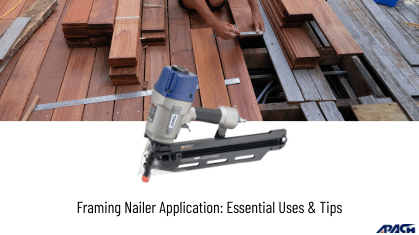
Framing nailer application covers a wide range of tasks and job sites where speed, strength, and fastening efficiency are essential for structural woodwork. These high-speed, heavy-duty tools drive large-diameter nails—typically 0.113" to 0.148" shank diameters and lengths from 2" to 3-1/2"—into dimensional lumber like 2x4s and 2x6s. Common uses include rough framing, sheathing, subfloor work, and rapid assembly during new construction and renovation projects.
Speed and productivity are the primary benefits. Compared with manual hammering, framing nailers dramatically reduce build time, deliver consistent fastening depth, and lower worker fatigue—making them indispensable on fast-paced residential and commercial jobsites.
Power sources influence portability and performance. Pneumatic nailers remain the most common for high-volume framing, while cordless models—whether battery-gas hybrids from Paslode and Metabo HPT or all-electric versions from DeWalt and Milwaukee—provide mobility and simpler operation in remote or tight spaces. Choosing the right framing nailer depends on the scale of the project, access to power, and service requirements.
This guide explores key application areas such as residential and commercial wall framing, flooring and deck construction, heavy timber and load-bearing assemblies, renovation work, and disaster recovery tasks. It also covers nail selection, proper fastening techniques, safety practices, and routine maintenance for reliable performance.
Designed for contractors, carpenters, DIYers, and project managers across the United States, this article offers practical, safety-focused insights to help ensure stronger, faster, and more consistent framing results.
Key Takeaways
- Framing nailer application covers structural fastening tasks where speed and strength matter most.
- Framing nailer uses reduce time, improve consistency, and lower worker fatigue compared with hand nailing.
- Pneumatic, cordless gas-battery, and all-electric nailers each offer tradeoffs in portability and maintenance.
- This framing nailer guide will detail tool selection, nail types, techniques, and framing nailer safety.
- The content is aimed at U.S. contractors, carpenters, DIYers, and project managers seeking practical advice.
Framing Nailer Application for Construction and Structural Work
Framing nailers speed framing tasks on jobsites of all sizes. They drive dozens of nails per minute, cutting time compared with a hammer and nail. Consistent nail depth and placement raise shear strength and lower callbacks during inspections and drywall hang. Use the right tool for each task to match nail pattern, magazine angle, and material.
Residential and Commercial Framing Uses
On homes and light commercial buildings, a wall framing nailer is ideal for assembling studs, top and bottom plates, and partition walls. Contractors rely on a commercial framing nailer for faster cycles on multi-family or small commercial projects where crews must move quickly between floors. Builders choose nailers with 21°, 28°–30°, or 34°–35° magazines to reach tight stud bays and meet local nail schedules.
For roof truss nailing, nail pattern and clip angle affect access and code compliance. Follow engineered drawings and inspector guidance when the connection calls for connectors or bolts instead of nails.
Flooring and Deck Framing
Floor joist nailing and rim joist fastening work go faster with a framing nailer. Subfloor sheathing and temporary bracing benefit from rapid attachment that keeps walls square until permanent hardware is installed. A deck framing nailer or an outdoor framing nailer with corrosion-resistant fasteners is the proper choice for exterior projects. Spacing, nail type, and avoidance of over-driving matter for long-term performance.
Use hot-dipped galvanized or stainless nails on pressure-treated lumber to prevent rust. Cordless nailers improve mobility on decks away from compressors, while angled models help reach joist intersections and hanger locations.
Heavy Timber and Load-Bearing Assemblies
When assembling large headers, beams, or crates, a heavy timber framing nailer can speed initial alignment and temporary fastening. Post and beam nailing and structural timber fastening sometimes require ring- or spiral-shank nails for better withdrawal resistance when the design permits nails.
Designers often specify bolts, lag screws, or Simpson Strong-Tie connectors for critical load-bearing joints. Use nails for secondary components or to hold members while mechanical fasteners are installed. Follow engineered specs for nail length, type, and placement when nails are allowed in load-bearing assemblies.
- Typical tasks: studs, plates, trusses, sheathing, and blocking.
- Productivity: dozens of nails per minute versus manual hammering.
- Materials: exterior-grade and pressure-treated lumber need corrosion-resistant fasteners.
- Limitations: heavy timber connections often require bolts or connectors for rated capacity.
Practical Tips, Safety, and Best Practices for Using a Framing Nailer
Choosing the right gear and following simple routines keeps projects running and people safe. This brief guide covers framing nailer selection, framing nail types, safe work habits, and quick fixes so carpenters and DIYers get durable results with fewer delays.
Tool Selection and Nail Choices
Select the power source that fits the job. Pneumatic nailers offer continuous power for large jobs on site. Cordless models from DeWalt, Milwaukee, or Paslode work best for remote or tight spots. Gas nailers are useful where compressors are impractical.
Match nail sizes and collations to manufacturer specs. Use smooth-shank nails for general framing, ring shank nails for decking or high-hold needs, and galvanized framing nails for treated lumber or exterior use. For 2x4 assemblies, 3" nails are common; 2x6 pockets often call for 3-1/2" nails. Follow ASTM and ICC-ES guidance and local code when choosing fasteners.
Proper Techniques for Reliable Fastening
Hold the nose flush and set depth to avoid over- or under-driving. Over-driven nails lose holding power. Under-driven nails interfere with sheathing and trim. Practice how to use a framing nailer on scrap before starting critical joins.
Use recommended nailing patterns and spacing for studs, plates, rim joists, and sheathing. Many manufacturers and codes specify spacing; when in doubt, use two nails per stud-to-plate connection where required. Stagger near-edge nails to prevent splitting.
Choose sequential actuation for control and safety, especially for less experienced users. Contact or bump fire is faster but raises the chance of misfires and accidents.
Safety Precautions and PPE
Wear nail gun PPE every time. ANSI Z87.1 safety glasses, hearing protection, hard hats on active sites, and work boots reduce injury risk. Gloves help with vibration but avoid loose cuffs that catch moving parts.
Treat the tool as loaded. Disconnect air, battery, or fuel before clearing jams, adjusting depth, or performing maintenance. Never bypass safety mechanisms or point the nailer at anyone. Keep bystanders clear and communicate with crew members during nailing operations.
Prepare for injuries: for nail penetration, do not remove deeply embedded nails in the field. Stabilize the wound and seek medical assistance. Keep nailer first aid supplies and emergency contacts on site.
Maintenance and Troubleshooting
Clean the magazine and nose daily in dusty conditions. For pneumatic nailers, add a few drops of pneumatic tool oil per the manual. Charge batteries for cordless units and check fuel cells on gas models. Inspect O-rings, seals, and driver blades for wear.
When you need to fix nail jams, disconnect power and follow the manual step-by-step to clear nails. For framing nailer troubleshooting, check nail size, collator angle, and feed settings when misfires occur. Low power issues often tie to compressor pressure, battery charge, or depleted fuel cells.
| Topic | Tip | When to Act |
|---|---|---|
| Framing nailer selection | Match power source and weight to job demands | Before starting a project |
| Framing nail types | Smooth for general framing, ring shank nails for high-hold | When fastening decking or subject to lateral loads |
| Galvanized framing nails | Use with treated lumber or exterior exposure | Always for treated or outdoor builds |
| How to use a framing nailer | Practice depth, keep nose flush, favor sequential firing | At setup and when changing operators |
| Nailing patterns | Follow manufacturer and code spacing; use two nails per stud where required | During layout and sheathing |
| Framing nailer safety | Disconnect power before maintenance, never bypass safeties | Any time tool is serviced |
| Nail gun PPE | Safety glasses, hearing protection, hard hat, boots | Every operational period |
| Nailer first aid | Stabilize wounds; seek medical care for embedded nails | Immediately after injury |
| Framing nailer maintenance | Clean, oil (pneumatic), charge batteries, inspect seals | Weekly or per manufacturer hours |
| Fix nail jams / Framing nailer troubleshooting | Disconnect power, clear jam per manual, check feed and driver blade | At first sign of feeding issues or misfires |
Conclusion
This framing nailer summary highlights how versatile these tools are across residential and commercial framing, flooring and deck construction, heavy timber tasks, and renovation or disaster-recovery work. When used appropriately, framing nailers deliver speed, consistent fastenings, and lower labor costs compared with hand nailing. Remember that heavy timber and critical load-bearing assemblies may need supplemental connectors or engineered solutions beyond nails alone.
For practical next steps, choose a nailer that fits the job scale and mobility needs, and pick nails and coatings matched to the materials and exposure. Practice framing nailer best practices such as sequential firing, depth control, and testing settings on scrap lumber. Prioritize construction nailing tips: wear the right PPE, follow safe handling techniques, and keep the tool clean and well lubricated for reliable performance.
Follow local building codes, manufacturer manuals, and ANSI/OSHA standards, and buy tools or parts from reputable brands like DeWalt, Paslode, Bostitch, Milwaukee, or Metabo HPT. Seek hands-on training or mentoring before attempting large structural work, and consult structural specifications or an engineer for critical assemblies where nails may not be sufficient. Finally, test tools on scrap material to fine-tune depth and settings before starting the main project.
FAQ
What are the main benefits of using a framing nailer?
Framing nailers dramatically increase speed and productivity compared with hammering. They deliver consistent nail set depth and fastening strength, reduce worker fatigue, and help teams meet tight construction schedules. Consistency also improves shear strength and lowers the chance of callbacks due to loose or uneven fastenings.
What power sources and brands are common for framing nailers?
Common power sources include pneumatic (air compressor), cordless battery-gas hybrid (Paslode, Metabo HPT), and all-electric cordless models (DeWalt, Milwaukee). Choice affects portability, runtime, maintenance, and jobsite logistics. Pneumatic models excel on high-volume sites; cordless tools add mobility for remote or renovation work.
Where are framing nailers typically used in construction?
They’re used for assembling wall studs, top and bottom plates, roof trusses, partition walls, subfloor sheathing, rim joists, joist blocking, and deck framing. Framing nailers speed installation of 2x4, 2x6, and similar lumber in residential and light commercial projects and are useful for temporary bracing and sheathing during rough framing.
Can framing nailers be used for heavy timber and load-bearing assemblies?
Framing nailers can assist with larger members for initial alignment, temporary fastening, or secondary components. However, many heavy timber or engineered connections require bolts, lag screws, or metal connectors (Simpson Strong-Tie) for predictable shear and withdrawal values. Use ring- or spiral-shank nails only where the structural design and code permit.
How do I choose the right nail type and coating?
Use smooth-shank nails for general framing and ring- or screw-shank nails for increased withdrawal resistance in decking or flooring. For exterior or pressure-treated lumber, choose hot-dipped galvanized or stainless-steel nails to resist corrosion. Always follow the nailer manufacturer’s specs for diameter, length, and collated angle.
What magazine angles should I consider for access and code compliance?
Common magazine angles are 21°, 28°–30°, 34°–35°, and 15°. Narrower angles help fit into tight stud bays and corners. Choose the angle that balances access with the nail types you need and any local code or engineered nail schedules required for specific connections.
Should I use sequential or contact (bump) firing?
Sequential actuation offers more control and is safer for less experienced users or when precision is required. Contact (bump) firing is faster but increases the risk of accidental discharge and should be used only by experienced operators under appropriate safety controls.
How do I avoid splitting wood and nail blowouts?
Avoid nailing too close to board ends, stagger nail placement, and consider pre-drilling near edges on thin or brittle stock. Use the correct nail length and type for the material. For treated lumber, use corrosion-resistant nails to prevent splitting and long-term degradation.
What personal protective equipment (PPE) and safety practices are required?
Wear ANSI Z87.1 safety glasses or a face shield, hearing protection (earplugs or earmuffs), hard hats on active sites, and sturdy footwear. Use gloves to reduce vibration exposure. Always treat the tool as loaded, disconnect power (air, battery, or fuel cell) before clearing jams or servicing, and never bypass safety devices.
How should framing nailers be maintained and troubleshot?
Regularly clean dust and debris from the magazine and nose, lubricate pneumatic nailers with tool oil per manufacturer guidance, and inspect seals, O-rings, and driver blades. For jams, disconnect power and clear nails per the manual. Check compressor pressure, battery charge, or fuel cells if power is low. Use OEM parts from brands like DeWalt, Paslode, Bostitch, Milwaukee, or Metabo HPT.
Are there code or inspection issues I should be aware of?
Follow local building codes, engineered connector schedules, and inspector requirements. Some structural connections call for bolts or metal connectors rather than nails, and hurricane or seismic zones may specify nail size, spacing, or connector hardware. Always check engineered drawings and manufacturer data sheets.
What are best practices for subfloor and deck fastening?
Use the correct fastener type and spacing as specified by the subfloor or decking manufacturer. For exterior decks, select hot-dipped galvanized or stainless nails to resist corrosion. Allow for wood movement by using appropriate nail patterns and avoid over-driving nails to preserve holding strength and prevent squeaks.
Can framing nailers be used in industrial or pallet manufacturing?
Yes. Framing nailers speed assembly of large crates, pallets, scaffold framing, and storage racking components. They are valued in production settings for rapid, repeatable fastening, though manufacturers may still specify screws or bolts for certain load-bearing elements.
What should I do if someone is injured by a nail penetration?
For nail penetration injuries, do not remove deeply embedded nails in the field; stabilize the area and seek prompt medical attention. For minor punctures, clean the wound, control bleeding, and seek medical care if there’s risk of infection. Keep a stocked first-aid kit and ensure workers know emergency procedures.
How should I store and transport my framing nailer?
Store the tool unloaded, in a dry case to prevent corrosion. For pneumatic systems, drain compressor tanks to remove moisture. Transport with batteries or fuel cells secured and follow applicable transport regulations for batteries and fuel cartridges. For commercial fleets, schedule periodic professional servicing.
At APACH INDUSTRIAL CO., LTD., we provide high-performance pneumatic fastening tools designed for professional framing efficiency and long-term reliability. Our solutions help contractors and builders achieve faster installation, stronger structural performance, and safer jobsite productivity.
Looking for the right framing nailer for your next project? Our team is ready to assist you with product recommendations, technical support, and quotation requests tailored to your business needs.