How to Use an Air Needle Scaler Efficiently and Safely
1. Understanding the Air Needle Scaler
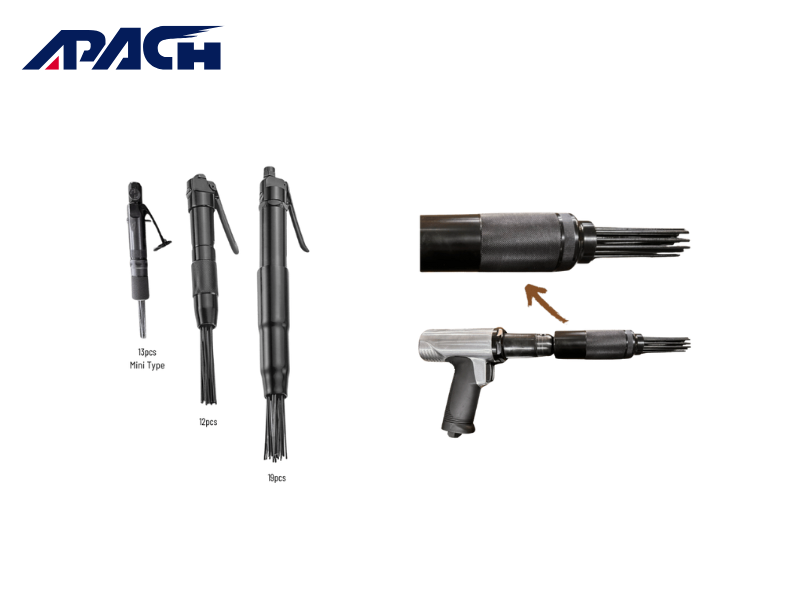
An air needle scaler uses a set of steel needles that move rapidly in a piston-driven motion to chip away material. These tools are ideal for irregular surfaces and tight corners that are hard to reach with grinders or sanders.
Learn more:
What is an Air Needle Scaler and How Does It Work?
2. Pre-Operation Checklist
- Inspect the tool: Check for damaged needles, loose parts, or worn connections.
- Verify air supply: Ensure the compressor delivers the recommended air pressure and flow rate (usually 90 PSI).
- Lubricate the tool: Apply a few drops of pneumatic tool oil to prevent wear and moisture damage.
- Wear safety gear: Always use safety glasses, ear protection, gloves, and a dust mask or respirator.
3. Efficient Operating Techniques
- Hold the tool at a 45° angle: This maximizes impact efficiency and helps prevent gouging the surface.
- Work in short passes: Move the scaler steadily and avoid pressing too hard to let the tool do the work.
- Use the correct needle type: Fine needles are best for soft coatings; thick ones for tough rust or slag.
- Avoid overworking the area: Excessive chipping can damage the surface underneath.
4. Safety Tips
- Check the work area: Clear away loose objects and make sure surfaces are stable.
- Disconnect when not in use: Always disconnect the air supply when changing needles or making adjustments.
- Ventilation matters: When working indoors, ensure good airflow or use an exhaust system to reduce airborne dust and contaminants.
Air Needle Scaler PPE and Safety Equipment Chart
| Safety Equipment | Purpose | Recommended Usage |
|---|---|---|
| Safety Goggles / Face Shield | Protect eyes and face from debris | Mandatory during operation |
| Ear Protection | Reduces exposure to high noise levels | Required for prolonged use |
| Anti-Vibration Gloves | Improves grip and reduces hand fatigue | Recommended for industrial applications |
| Dust Mask / Respirator | Prevents inhalation of harmful particles | Essential for rust and paint removal |
| Steel-Toe Boots | Protects feet from dropped tools or debris | Recommended in workshops and shipyards |
| Protective Clothing | Shields skin from flying particles | Useful for heavy-duty cleaning environments |
5. Maintenance for Long-Term Use
- Clean after use: Blow out debris and wipe down the tool to prevent buildup.
- Lubricate daily: Use pneumatic oil to prevent corrosion and internal friction.
- Replace worn needles: Worn needles reduce effectiveness and may damage the tool’s piston over time.
- Store properly: Keep the scaler in a dry, clean location to avoid moisture damage.
Air Needle Scaler Maintenance Schedule
| Maintenance Task | Frequency | Benefit |
|---|---|---|
| Add pneumatic tool oil | Before each use | Reduces friction and internal wear |
| Clean tool exterior | After each use | Prevents buildup of debris and dust |
| Blow out debris with compressed air | Weekly or after heavy use | Keeps internal components clean |
| Inspect and replace needles | Regularly | Maintains consistent performance |
| Check air hoses and fittings | Monthly | Prevents leaks and pressure loss |
| Store in protective case | After use | Extends tool lifespan |
Know more maintenance and safety tips.
6. Common Mistakes to Avoid
- Using the tool without proper PPE (personal protective equipment).
- Applying excessive force instead of letting the tool do the work.
- Running the scaler continuously without allowing cooling time.
- Neglecting to oil the tool regularly, which leads to premature wear.
Conclusion
An air needle scaler is an efficient and reliable tool when used with care and proper technique. By following the safety practices, maintenance steps, and operating guidelines shared in this article, you can ensure both effective performance and a long service life for your tool. Whether you’re preparing surfaces for welding or stripping paint from old metalwork, mastering the air needle scaler will give you cleaner, faster results with fewer tool replacements.
FAQs
1. Can an air needle scaler damage the metal surface?
If used correctly, it removes only rust, paint, and contaminants with minimal damage. However, improper pressure or worn needles can cause uneven surface marking.
2. What is the difference between a standard and heavy-duty air needle scaler?
- Standard models: Suitable for general rust and paint removal
- Heavy-duty models: Designed for shipyards, thick coatings, and continuous industrial use
3. Can I use an air needle scaler for paint removal?
Yes. It is highly effective for stripping old paint coatings from metal surfaces, especially in industrial and automotive applications.